









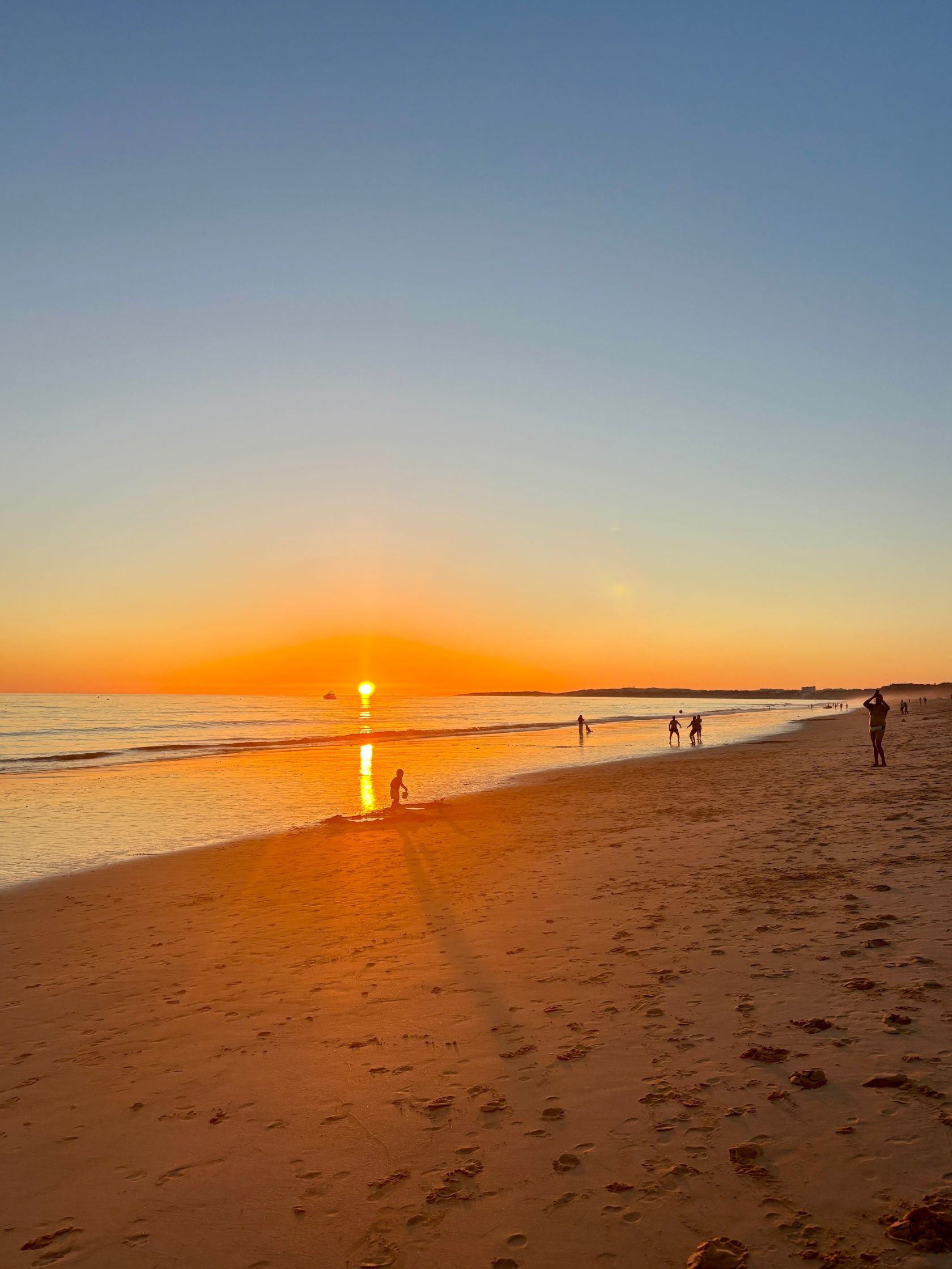
The almond trees have already flowered. The hills are starting to become green from winter rain. On certain afternoons, the light turns warm enough to suggest summer, yet the car parks near the beaches remain half empty, the grocery stores are navigable, and the roads are relatively quiet. This is the season before.
Before the airport queues lengthen. Before the reservation lists at coastal restaurants fill days in advance. Before the familiar conversation about traffic on the EN125 begins again.
In these weeks, the region seems to take a breath.
You can walk into a restaurant in Vale do Lobo on a Friday evening and find a table without planning it days ahead. The staff have time to talk. They recommend a wine without glancing nervously at the door. At the beach, towels lie with generous space between them. The sand holds footprints for longer.
It is not quiet in the absolute sense. Builders are still at work. School runs still dictate the mornings. But there is room around things.
The air changes first. Windows open again after months of damp chill. Bougainvillaea begins to return to the walls that looked bare in January. Roadside verges turn bright with wildflowers. The green that winter brings has not yet burned off under heavy heat. For a brief period, everything looks newly rinsed.
I have come to recognise and welcome this time. In winter, people speak about storms, leaks and repairs, about children visiting from abroad, about the difficulty of flights. In high summer, the talk becomes logistical. Parking. Bookings. Visitors arriving. In this in-between, the tone is reflective. Plans are made in pencil, not ink.
There is also something unspoken in the rhythm — a quiet bracing. Locals know what is coming. The restaurant owners who smile easily now will work long hours in July and August. The spacious café terraces will soon hum with multiple languages at once. No one resents the summer. It brings income and movement. But the season before holds a different kind of value.
You see it on the coastal paths. Walkers are slow to watch the sea without stepping aside for groups. Cyclists move at an unhurried pace. There is time to notice details: the smell of orange blossom carried on a breeze, the sound of cutlery being laid out on a terrace, preparing for later.
For those of us who live here year-round, this period offers perspective. It reminds you why you chose this place before it becomes a destination for others. The scale feels human.
The Algarve’s economy relies heavily on tourism. That reality shapes housing, wages, and infrastructure. The summer surge is necessary. Yet this quieter stretch reveals another version of the region. One that functions without a rush.
I often think of it as a rehearsal, though nothing is being performed. It is simply the landscape warming up. Gardens are trimmed. Menus are adjusted. Beach bars repaint their shutters. There is preparation without pressure.
Then, gradually, the pace tilts. Flights fill. Tables are harder to secure. Towels edge closer together on the sand. The green fades under steady sun.
But for a few measured weeks each year, the Algarve belongs to those who notice it waking. Not yet crowded, not yet hurried. Just on the verge.
There is a particular pleasure in standing at that threshold, aware that it will pass, and choosing to walk and enjoy it a little more while it lasts.